
Senior fellowships in cardiothoracic anaesthesia and perioperative medicine
We routinely offer 12 month senior fellowships in cardiothoracic anaesthesia and perioperative medicine, aimed at anaesthetists who are post CCT or ST6 and above.
These fellowships are most suited to those aspiring to a career in cardiothoracic anaesthesia, but are also open to those who wish to gain more experience managing patients with complex cardiac and respiratory disease. 6 month fellowships may be possible with discussion.
Our well established fellowships provide experience in the anaesthesia for routine and complex cardiac cases, a wide range of thoracic surgery, urgent and elective cardiology procedures, as well as exposure to ECMO services and critical care. Developing skills in TOE and working towards accreditation is also a key part of the role, alongside a wide range of non-clinical activities.
Applications are through NHS jobs but we encourage you to get in touch with us before to find out more about the role. Details of how to do so can be found in the contact section of the website.
What to expect from a Senior fellowship with Barts POM
Clinical
A one-year fellowship would provide training in the perioperative care for all the following:
Uncomplicated cardiac procedures eg CABG, AVR, enabling you to perform independently
Off pump cardiac procedures
Complex valvular surgical cases
Minimally invasive cardiac surgery
Complex thoracic and descending aortic surgery
Adult congenital heart surgery
Surgery for hypertrophic cardiomyopathy
Interventional cardiological procedures e.g. TAVIs, MitraClip, complex coronary intervention
Heart Attack Centre and Direct Arrhythmia Pathway emergencies, including the management of severe stages of cardiogenic shock
Major thoracic surgery, including thoracoscopic video-assisted and robot-assisted procedures, decortication, and lung volume reduction surgery
Airway interventional procedures, both diagnostic and therapeutic
In addition, a senior fellow would be involved in all aspects of the post operative care of patients, managing their stay on Critical Care and any arising complications. This would include exposure to mechanical circulatory support in the form of VA ECMO, intra-aortic balloon pump and Impella use.
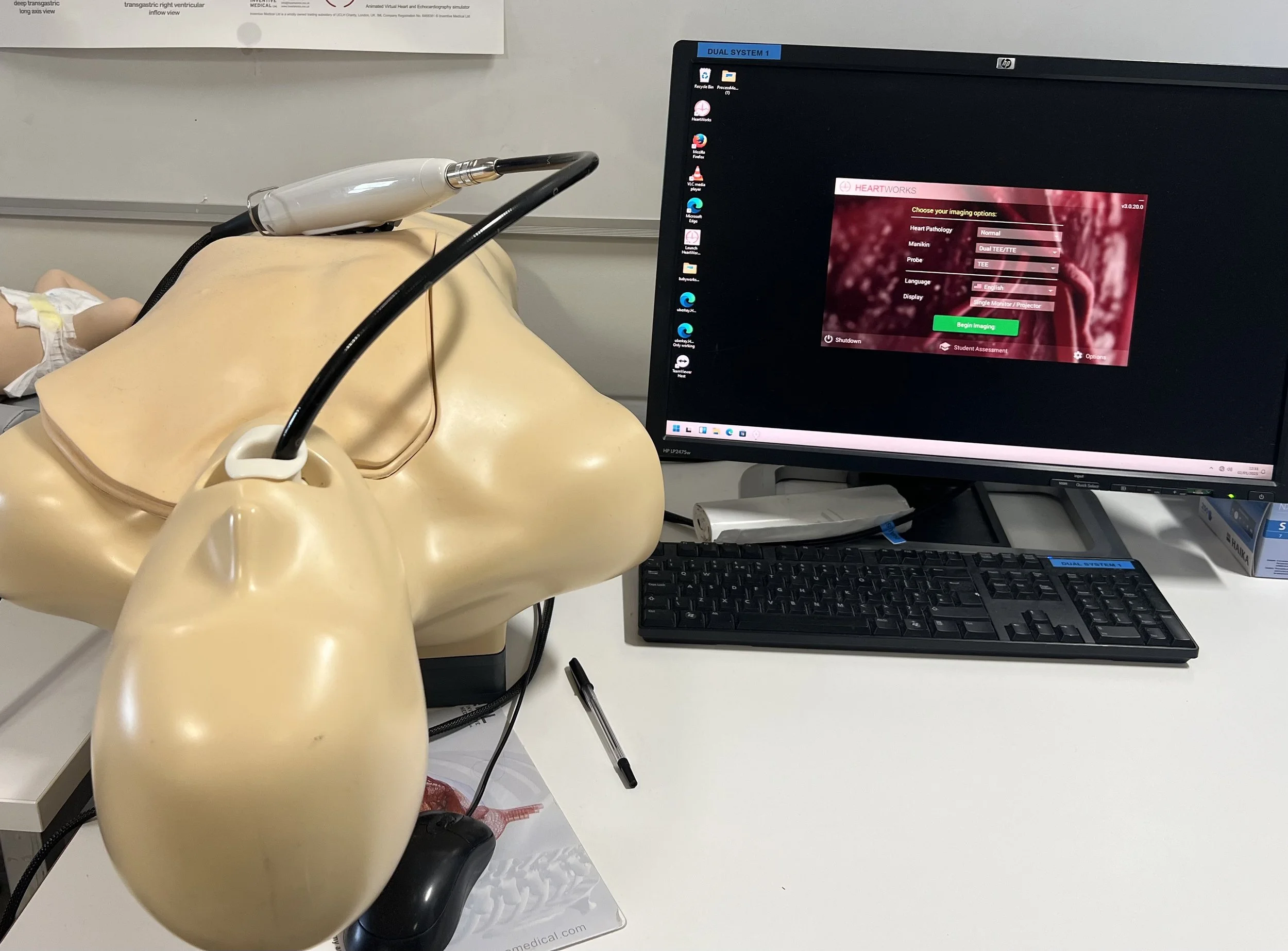
We encourage all senior fellows to develop skills in transoesphageal echocardiography (TOE) and provide support to achieve accreditation. Training opportunities are provided by all our theatre consultants who perform peri-operative TOE, as well as TOE for critical care patients and those in the cardiac catheterisation labs. Running alongside clinical exposure we have a very well established TOE teaching programme, regular image review sessions and simulators available for use.
Non-clinical
We are an extremely active and ambitious department, providing an abundance of opportunities to get involved in education, management, quality improvement, service development and research. A wide range of research activities are undertaken by the Perioperative Medicine Department in collaboration with Queen Mary’s University of London and there is potential exposure to this ever-expanding programme during your fellowship.
As a minimum, we would expect the following while working as a senior fellow:
Attendance at Cardiac Anaesthesia Partnership (CAP) educational sessions which take place monthly
Attendance at audit and governance days, held 10 times per year
Involvement in our teaching schedule, including TOE teaching and Journal Club
Involvement in at least one quality improvement or service delivery initiative
We actively encourage any interest in non-clinical activity and aim to ensure there is adequate SPA time for you to achieve their goals.
The role of a senior fellow at Barts
On normal working days you will typically be allocated to a range of lists in our cardiac and thoracic theatres, as well in the cardiology catheter labs. In the cath labs we typically provide daily planned anaesthetic cover for structural heart interventions and electrophysiology (EP) procedures. As you progress with your training we often aim to give the opportunity for suitable fellow led lists with local supervision.
On long working days, weekends and nights those on the senior fellow rota will usually carry the senior anaesthetic fellow phone/bleep, being the main point of contact for anaesthetics in the hospital. On of your main roles will be providing senior support to the surgical intensive care units, as well as the heart attack centre for primary PCI. You will also be involved in any out of hours theatre cases, with support from the on-call anaesthetic consultant. These include acute type A aortic dissections, patient’s returning to theatre following cardiac surgery, as well as other acute surgical cases.
The duty senior anaesthetic fellow (SPOC) also provides a key organisational role within the department. Organisational duties include allocating the pre-assessment of patients for the next working day to resident doctors in the department, reviewing emergency cases and optimising them for theatre, as well as helping the smooth running of the theatre lists throughout the department.
We also assign our senior fellows to days where the primary aim is to concentrate on developing skills in transoesphageal echocardiography (TOE). On these days you will have the opportunity to find interesting cases on theatre lists to develop your skills with support from the anaesthetic consultant, work on your logbook, organise video cases for accreditation, and carry out TOEs elsewhere in the hospital, such as ICU or cath labs.